- The United States has seen an average yearly growth rate of 18% in the number of powerlifting meets. The surge in popularity happened around 2010.
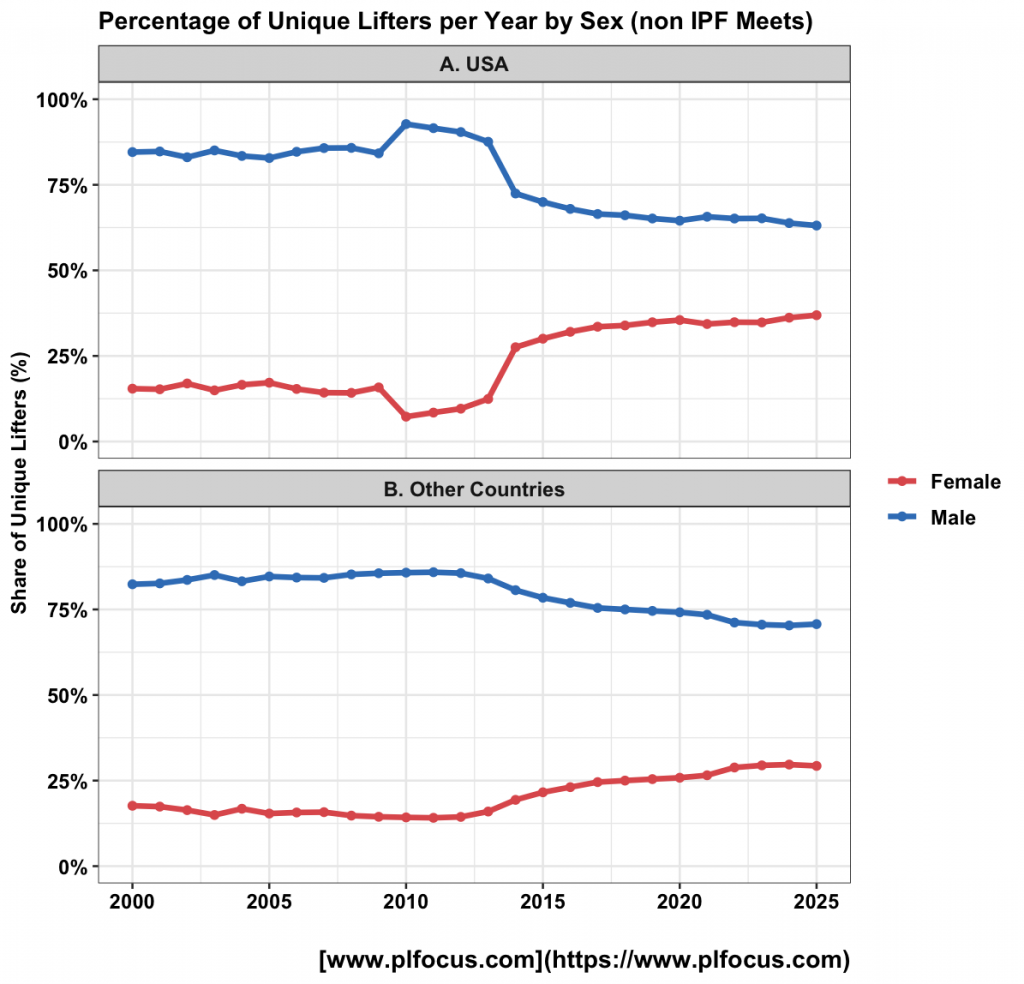
- Much of the growth has been driven by more women participating in powerlifting.
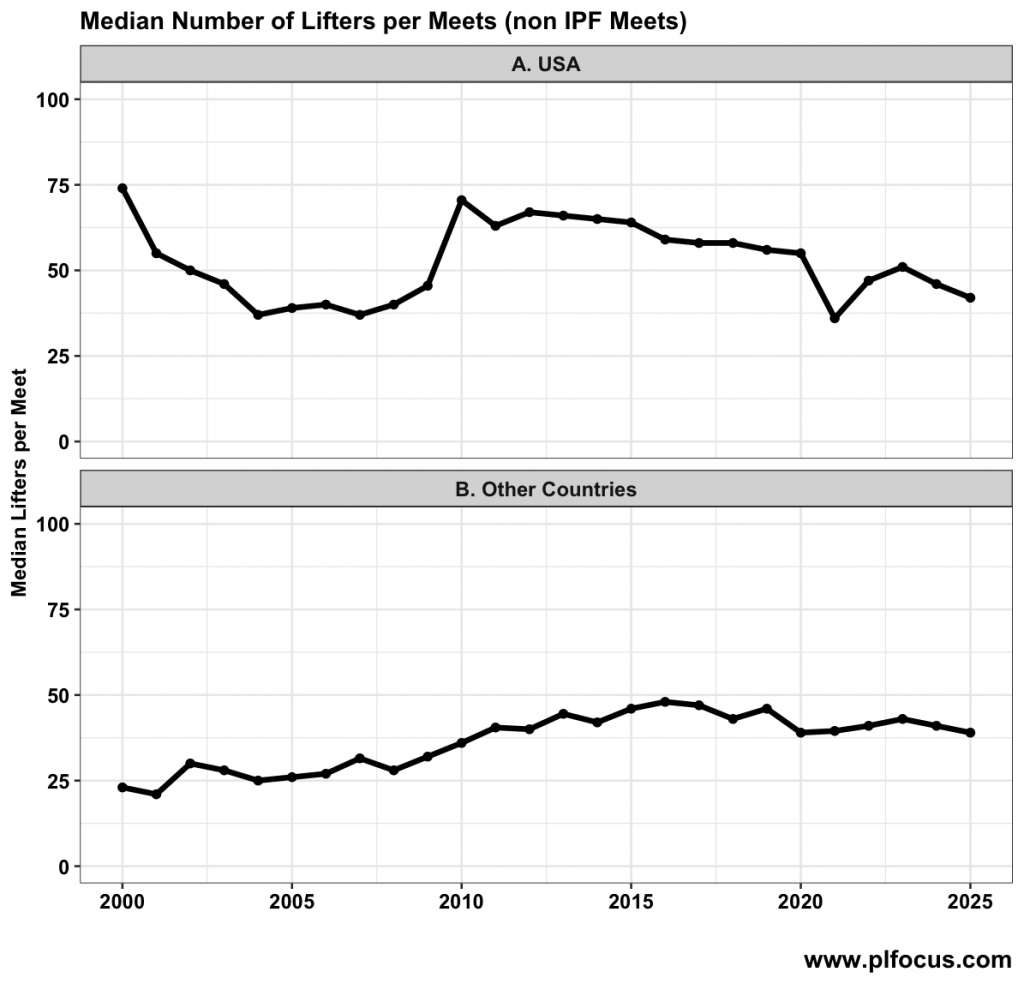
- While the number of meets has gone up, the number of lifters competing in those meets has gone down. Smaller meets should typically be more enjoyable for competitors and improve the audience experience.
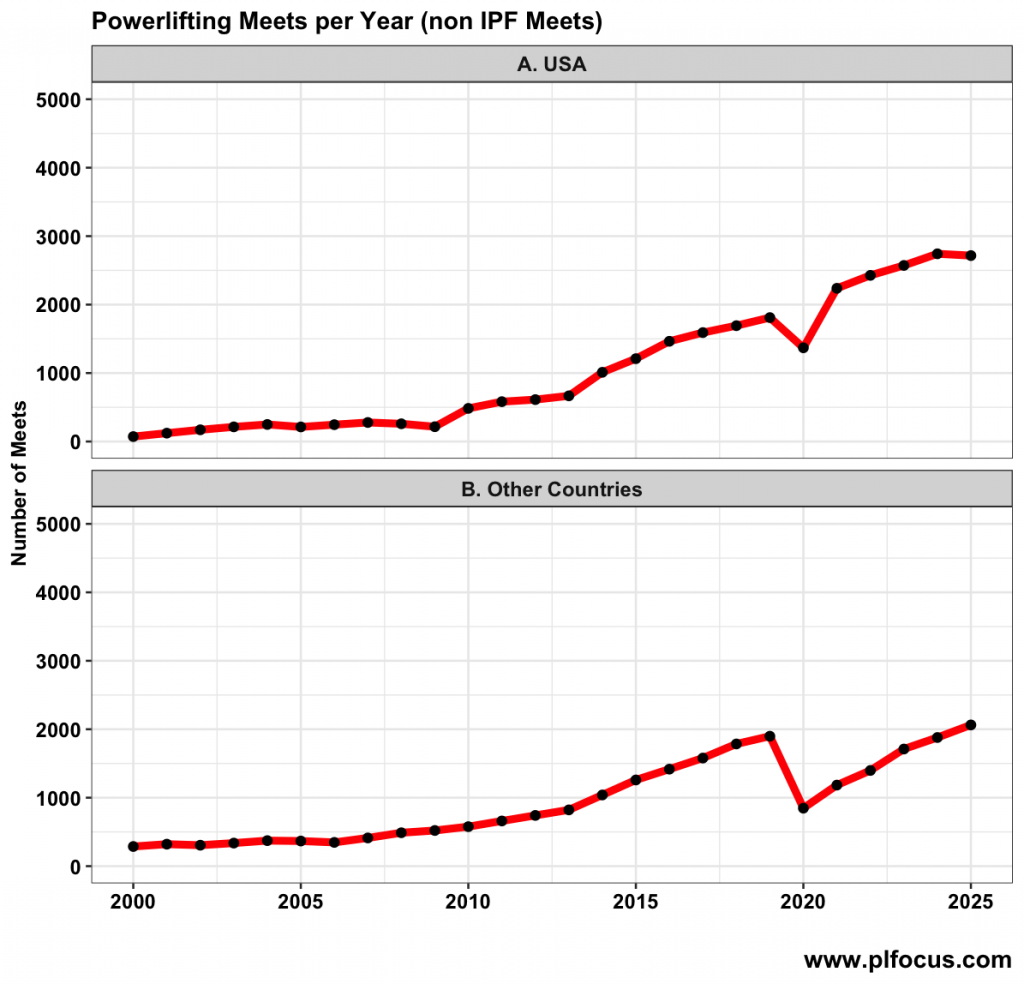
The sport of powerlifting has seen substantial growth. From 2010 through 2024, the US has seen increases in the number of powerlifting meets in all but one year, with the average rate of growth being 18%. This lone exception was 2020, which was largely the result of covid lockdowns. In the latest full year, 2025, there has been a small decrease in the number of meets. The real question is whether that is an anomaly or if the growth of powerlifting has plateaued.
One of the main causes for the explosion in powerlifting is that more women are participating. While women only accounted for 15% of lifters in the early 2000s, that percentage has ballooned to 36% in recent years.
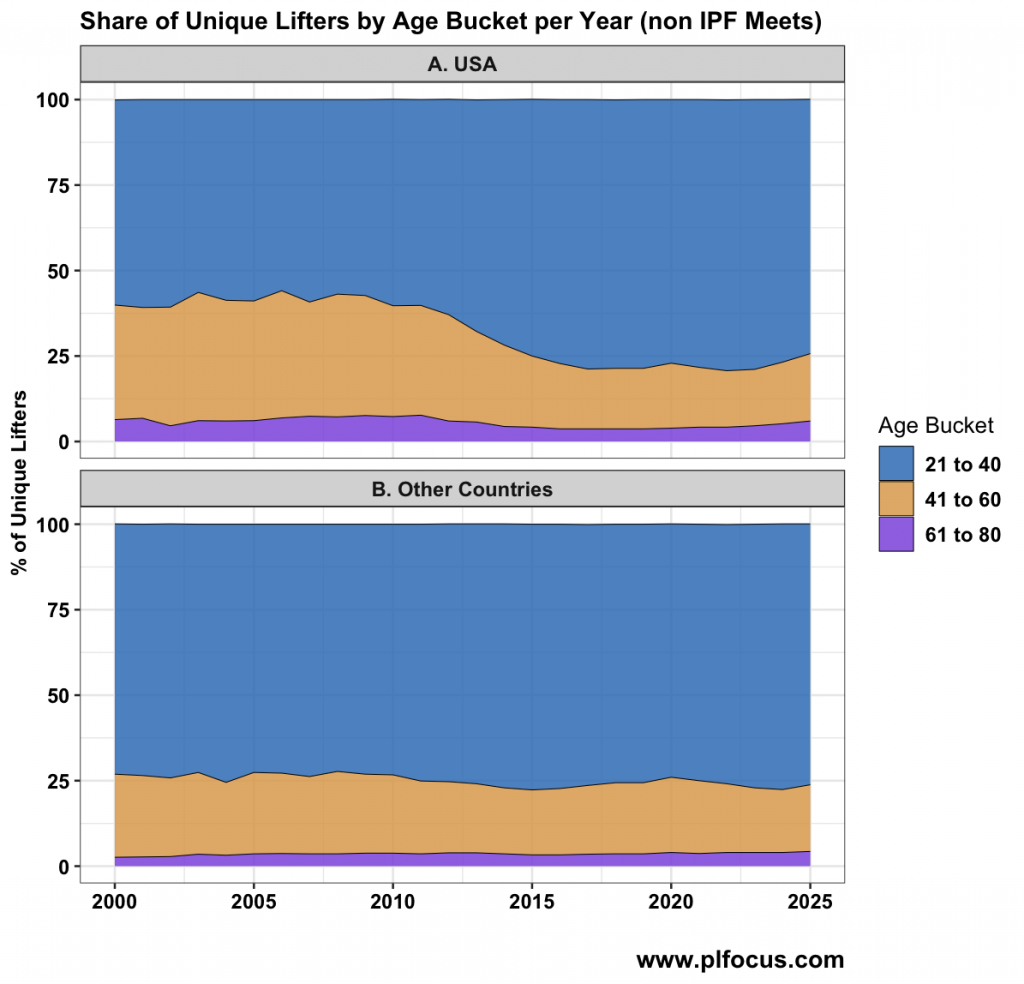
Another group of people contributing to the growth of powerlifting are younger folks. The amount of 21 to 40 years competing in powerlifting saw massive increases in the 2010s.
As the number of meets has seen a surge, the median number of lifters who competed in each powerlifting meet in the US has declined slightly over the past decade. In 2014, there were 65 lifters who competed in a typical meet. By 2025, that has fallen to 42 lifters. This is likely the result of more meets that lifters can compete in, so the size of those meets has dropped.
Are you a gym, fitness company, or other organization interested in solving some interesting data questions. Shoot me a message and let’s collaborate. Shoot me a message to mathewanalytics@gmail.com
